“The reign of tears is over. The slums will soon be a memory. We will turn our prisons into factories and our jails into storehouses and corncribs. Men will walk upright now, women will smile and children will laugh. Hell will be forever in rent.”

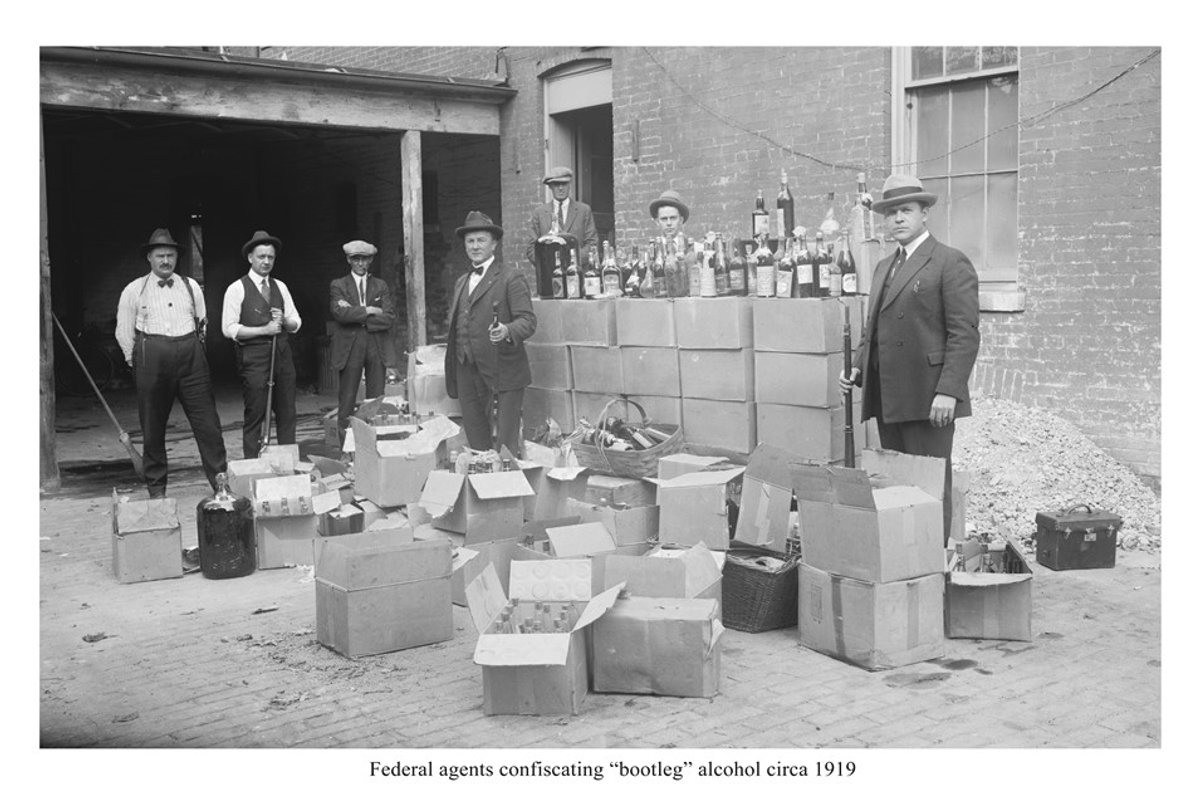
When Reverend Billy Sunday made this declaration in 1920 at the beginning of Prohibition, th America perceived itself at the peak of moral decrepitation. The 18 Amendment, prohibiting the sale, transportation and manufacturing of alcohol, was passed in order to reduce crime rates, lessen the prison-enforced tax burden and restore the long-forgotten purity of America.
In other words, the Senate’s passing of Prohibition was not supposed to commence the biggest alcohol party era in American history… but that is exactly what it did!

The decline of the American code of ethics and religious morality arguably began at the end of the Civil War in 1865. Veterans (many first introduced to alcohol while in the trenches) took solace in their local saloons to ease their memories of the horrors of war. Along with saloons came alcohol, gambling, prostitution and every other vice under the sun. So-called “proper” women were forbidden to step foot inside the shameful taverns, where dancing girls revealed more than merely fancy footwork. Town sheriffs kept busy schedules in attempt to keep the peace amongst the chaotic drunken parties and out-of- control saloon brawls. The religious morals of America’s founding fathers were quickly slipping into oblivion.
In order to reclaim the morality and pureness America had previously claimed, the Anti-Saloon League and Women’s Christian Temperance Union (WCTU) fought to ban the sale of alcohol beginning in the 1880s. The movement slowly gained popularity until America’s involvement in World War I in 1917, at which time the general consensus favored the use of grain for the soldiers’ rations rather than moral-decaying alcohol. In 1920, the Volsted Act was signed thus enacting Prohibition.

According to President Herbert Hoover, Prohibition was a “noble experiment”. According to musician Hoagy Carmichael, Prohibition was a “bang of bad booze, flappers with bare legs, jangled morals and wild weekends.” Books became places to hide liquor, women’s stockings were secured by hip flasks, and bathtubs became the perfect place to make homemade gin. Unemployed winery and brewery owners entered the liquor trafficking world as mob members and gangsters, while restaurateurs opened illegal “gin joints” after hours. Named after their secret word-of-mouth popularity, nearly a half dozen of these speakeasies emerged for every saloon that closed.
Rather than controlling the masses, Prohibition started the party. Americans were inspired to venture out in the realms of music, dance and fashion during this “Jazz Age”. Duke Ellington graced the keys, Ethel Waters grabbed the mic, and dancers got down and dirty with the Charleston. Women bobbed their hair, smoked cigarettes, wore red lipstick, and showed their knees. It was an era in which Americans outstretched their ungloved arms and danced to a different tune.
Hoover’s “noble experiment” was a horrible disaster. Thousands of people in the beverage indus- try lost their jobs, alcohol consumption began to rise, and wealthy, untaxed mobsters were paying off authorities. Many historians argue that there was never a time in history in which more Americans were blatantly breaking the law. In other words, Prohibition encouraged the very thing it attempted to demolish.

20’s Era Flapper
Rather than a “noble experiment”, Prohibition was one heck of a social experiment! Many Americans recognized they were breaking the law by participating in illegal alcohol consumption, and they were okay with that. They refused to believe that something that encouraged so much freedom of thought and expression could be so bad. And why should they? A lot of amazing advancement took place during Prohibition: the 19th Amendment passed, finally allowing women to vote; entertainment was at an all-time high, developing some of the most talented forms of music and dance known today; technology advances put televisions in houses and full-color on the big screen. Crime and alcohol consumption may have increased, but creativity skyrocketed.
Next year, BARGETTO WINERY will celebrate its 75th birthday, as we sold our very first bottle the day Prohibition ended. (Of course we happened to pick the grapes, ferment them, make and bottle the wine that very day as well). While obviously we want to th celebrate the anniversary of the winery, we also would like to acknowledge the 75th anniversary of the end of an era. We can try to relive the era and understand what F. Scott Fitzgerald meant when he said:
"Riding in a taxi one afternoon between very tall buildings under a mauve and rosy sky; I began to bawl because I had everything I wanted and knew I would never be so happy again."