It has been said that in polite company one should not speak about politics or religion. Well, I grew up in a family where just about everything was discussed at the family table, and politics and religion were two of the hottest topics.
Here at the winery we have discussed the importance of the history of wine, the health of wine, wine in art, yet perhaps never the metaphysical aspects of wine. As we know philosophers, poets, politicians and playwrights have been writing about the glorious and sublime aspects of wine for centuries. Wine is included throughout the Bible, from Noah ’ s planting a vineyard after the Great Flood to Jesus serving wine at the Last Supper. Many vineyard metaphors fill the gospels.
A few weeks ago, Regan Vineyards hosted some very special guests, five Benedictine monks of New Camaldoli from Big Sur, California. These monks have become somewhat annual honored guests at Regan for years. The Benedictine order dates backs to Italian founder St Benedict (480 -547 AD). By long held tradition the monks are allowed one day of recreation per month, and until recently this day was the only day of the month wherein the monks were allowed to enjoy meat. (Recently the enjoyment of meat has been expanded).

On a sunny and perfect September 29th, five monks drove up the beautiful California coast on Highway 1 and arrived at Regan. The group was led by Fr Raniero Hoffman, my friend and spiritual advisor, who was originally a parish priest in Maryland prior to joining New Camaldoli.
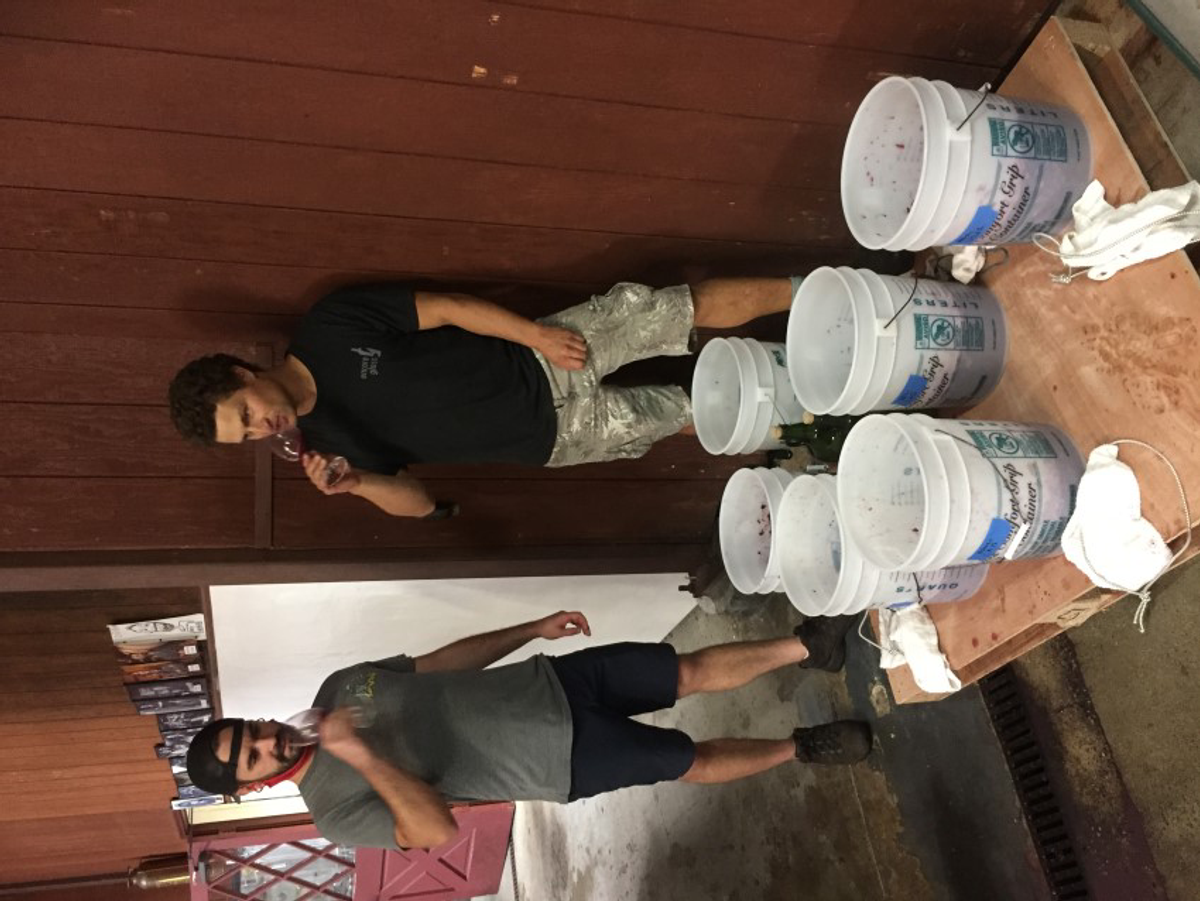
I asked Fr Raniero to bless the vintage as well as our new Regan wine tasting endeavor at Regan Vineyards. He came prepared with a special wine ritual and led our group of eight which included myself and my two local friends. Fr Raniero read from a book called The Spirituality of Wine by author Gisela Kreglinger, a book that he gifted to me, which in turn inspired me to write this newsletter. The following readings that Fr Raniero shared are now re -printed and

Fr Raniero leading a wine ritual from a reading of “the Spirituality of Wine ” I give full credit to the author.
“One of the notable things about learning to savor wine is that it engages so many of our senses: sight, smell, and taste all work together. It also takes a great amount of concentration: focused attention, patience, and a willingness to slow down and know more fully what is before us. It teaches us to become more aware of -and to listen to and evaluate -what we see, smell and taste. Tasting as Peynaud wisely says is ‘an act of self -examination ’ as we probe our memory and look for reference points in our past experience to identify what we smell and taste. ”

“Savoring wine teaches us to be more fully present to ourselves and the world around us. It teaches us to be part of a greater community which includes the sun, the rain, the soil , the vines , the labor of the vintner … it reminds us this world is a beautiful and mysterious place … and teaches us to be grateful …. To drink is to pray. ”
“Just as wine is a gift from God (writer note: think wedding feast of Cana), so is our human capacity to smell and taste. Traditionally the church has had an ambivalent stance toward the senses of taste and smell, in particular. The vintner can help us recover these God -given senses and turn them toward a life of contemplation. A well crafted wine will teach us that ‘the world is indeed charged with the grandeur of God ’ and ‘it can flame out ’ and ‘gather to unimagined greatness. ’ It takes a faithful and skilled vintner who will not spare the toil and will work the soil with care and love … it is to the vocation of the vintner that we must now turn. ”
“God ’ s gift of wine was particularly given to bring joy, and the moderate enjoyment of wine can indeed bring great joy, enliven and deepen conversation, relieve stress, bring comfort to the aging, and be beneficial to our health. Babette’s Feast portrays, in the most moving way, how feasting, including the enjoyment of wine, can stimulate emotional and spiritual renewal. When we use wine, food or any other substance as an anesthetic to cope with the stress, suffering, pain, and perhaps boredoms of our lives, we not only abuse God ’ s gifts but also lose ourselves from the possibility of receiving comfort and healing that comes from being in a relationship with God and one another … In the words of the German proverb: ‘to drink is to pray. ’”
I thank Fr Raniero and his confreres for sharing another wonderful aspect of wine with us and for bringing a sacred time to Regan Vineyards. Now back to harvest 2021.

Bona Nota: Its interesting to note the deep and significant relationship the Church has had with wine through the centuries … three examples:
- The Cistercian order of monks, starting in the 13th century in Burgundy, France and later in Germany, had a pivotal role in viticulture throughout Europe.
- The blind French Benedictine monk, Dom Perignon (1638 -1715), was one of the first to discover Champagne and shared the famous line with his fellow monks, “Come quickly, I’m drinking tasting stars. ”
- Finally, we must recall Franciscan friars were the first to plant vineyards at the California missions.