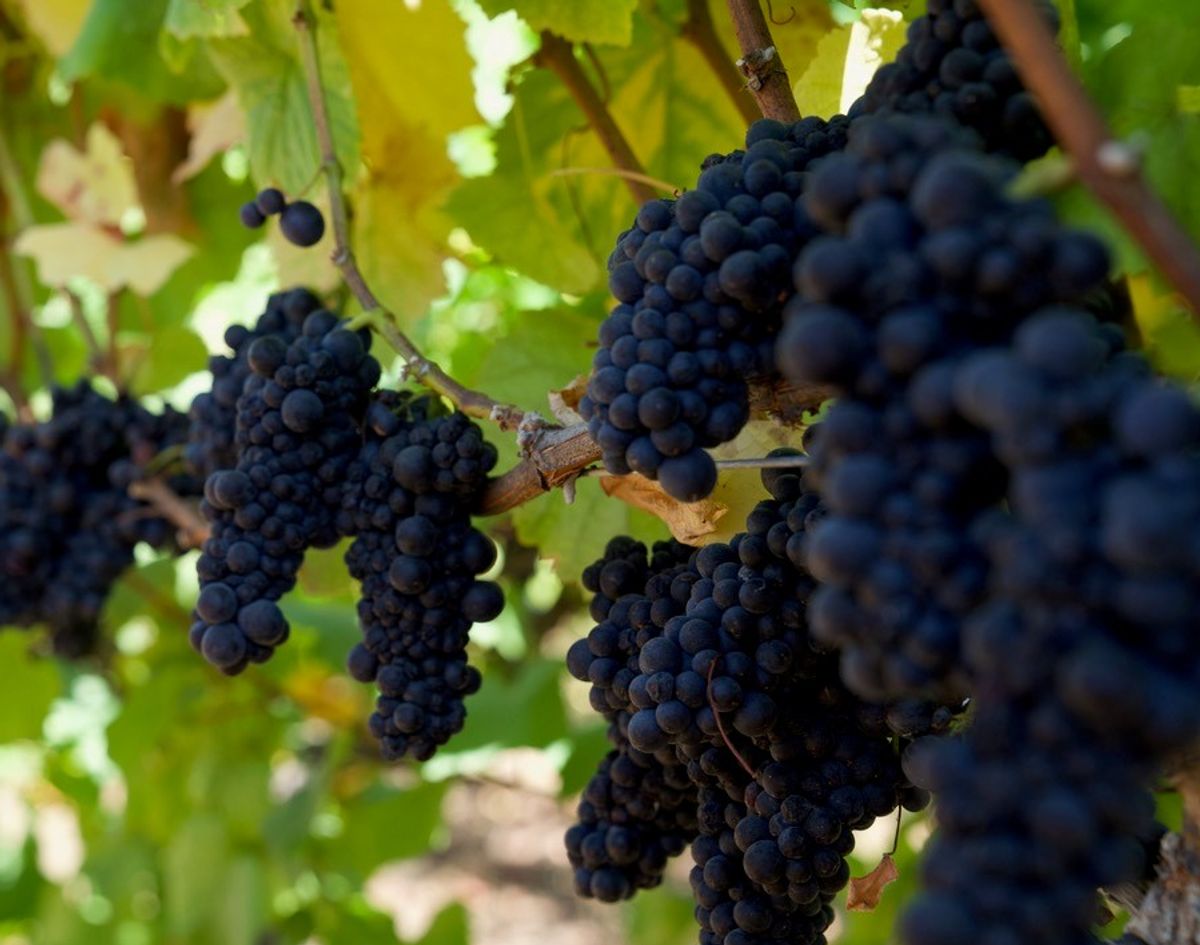
For nearly the entire 30 years that we have been growing wine grapes at Regan Vineyards, the greatest risk to the crop during late summer/ autumn has always been rain. Well, times have changed. Now I consider smoke taint the greatest risk to our premium wine.
During the week of September 7th there were nearly 600 fires burning simultaneously in California, and in 2018 there were a total of over 5000 wildfires. The damage to life and property is immeasurable. As it relates to vineyards, rarely do the flames actually burn the vines (more often vineyards act as effective fire breaks). Yet, the smoke from the proverbially distant fire can cause smoke taint in wine.
By late August, there were four major fires in the greater Santa Cruz area (located in the Santa Cruz Mountains, Carmel, Monterey and Big Sur). The one closest to Bargetto Winery and Regan Vineyards was the CZU Lightning Complex and it now has burned more than 86,000 acres (The book Vintage Bargetto showed a photo of a 1948 wild fire that started in the same area of the Santa Cruz Mountains and burned Regan all the way to the sea). While most of the August fires were by dry lightning, they were a long way from Regan Vineyards.
However some faint smoke aroma could be detected in the vineyard. Thus, our production team, Winemaker Bobby Graviano, Assistant Winemaker Keegan Mayo and I are jumping in to learn more about this new threat. Smoke taint is somewhat new, and the science behind it is still emerging. Let me share what we do know.

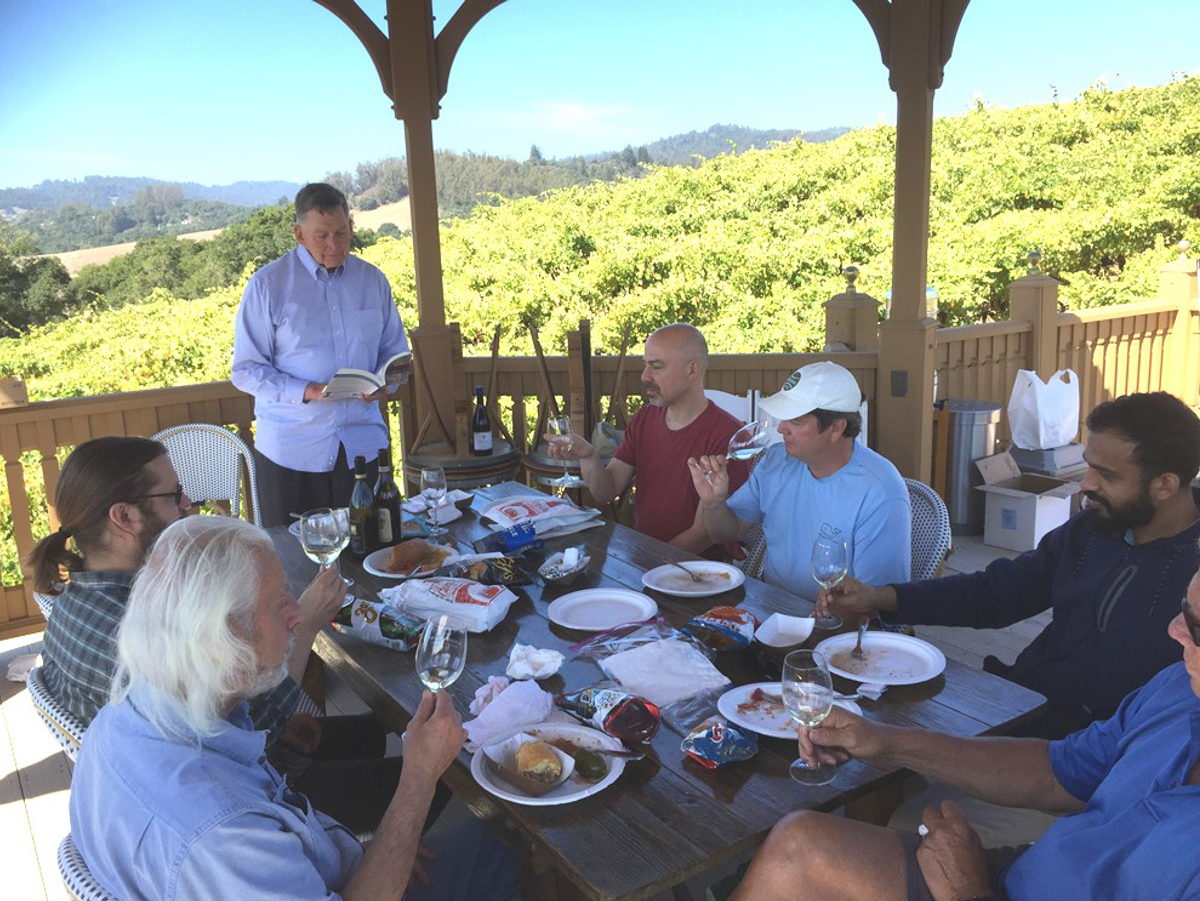
Winemaker Bobby Graviano and Asst. winemaker Keegan Mayo taste the micro ferments for smoke taint
When vegetation burns, volatile compounds are carried in the smoke miles away and can settle on the skins of grape clusters. With heavy smoke exposure, the wines can develop very negative pungent “ash -like ” aromas. Plenty of jokes abound about fume Cabernet and smoky Pinot Noir. Trust me, the aromas are neither subtle nor pleasant. They remind me of my youth when I would have to clean the stinky ash trays in the kitchen the morning after our cigar-smoking father and his friends held court! OMG!

While there are seven main compounds that cause its taint, the two key compounds that mark a “tainted wine ” are: guaiacol and his partner-in crime, methylguaiacol. At a very low concentration of just 2 parts per billion, the wine can be considered high risk for smoke taint. The plot thickens in that the newly crushed grapes may not reveal the danger lurking. Only after fermentation, when these taint compounds, which are bound by grape sugars become released, does the stinky quality fully emerge.
What came be done to avoid taint? Simply washing grape clusters in the vineyard is a pipe dream, because the taint compounds enter the juicy berries through the grape skins. White wine grapes pose lower risk as we can press the harvested grapes directly in the wine press and quickly separate out the juice. With red wines we can hasten fermentation, press early to remove the skins and add tannin to bind up the nasty taint compounds.
What are we doing to insure no smoke taint in Bargetto/Regan wines? First off, diffused smoke does not seem to cause taint. “Old smoke", that is, smoke which floats around for few days or smoke that ocean fog brings back to land (think Monterey Bay fog and Regan) appears to be much less harmful (Australian research confirms this). Yet, to be careful, in early September our hard working production crew will do several micro fermentations in the lab on Regan Pinot Noir, Chardonnay Merlot. Post -fermentation wines will be smelled and tasted and some samples will be sent to a lab to assure smoke taint does not exist in our wines.
Never a dull moment in 2020: pandemic, recession, social upheaval, heat waves and now wild fires. There has been more than enough drama this year. We started vintage 2020 at Regan on September 9th and hope to finish before any more calamities strike. This winegrower will sleep a bit better after the last cluster at Regan has been harvested.