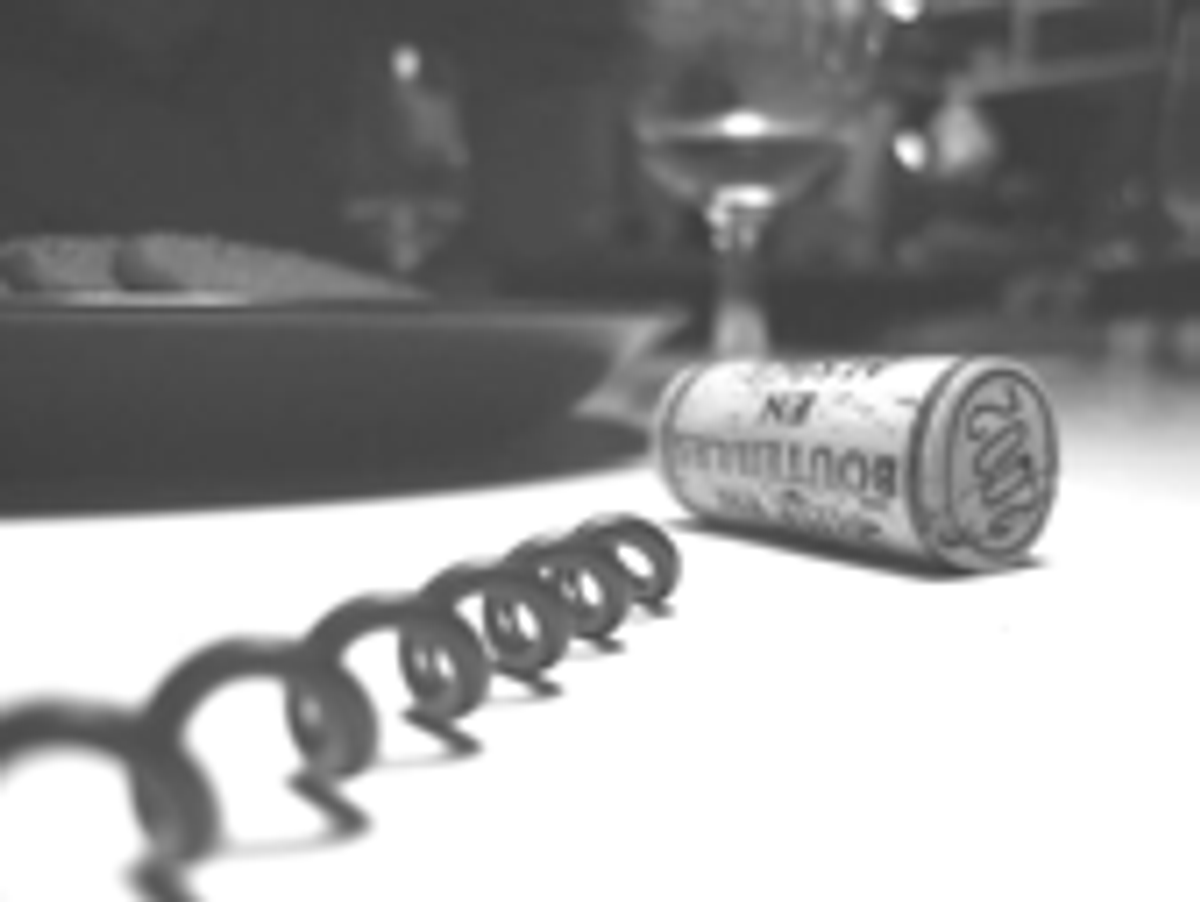
One evening, as I was opening up a bottle of red to enjoy with my meal, I stopped to closely examine the cork. I use the cork product in various ways, from posting photos in my daughter’s room to purchasing shoes with heels made of this material. I knew that cork was from a tree, and it sparked my curiosity about this particular species and its role in the wine industry.
The cork oak (Quercus suber) is the primary source for cork production worldwide. These trees grow in countries that run along the coast of the Mediterranean Sea, where the climate consists of high humidity, low
rainfall, and plenty of sunshine. The countries that produce the most cork include Portugal, Spain, France, Italy, Algeria, Tunisia, and Morocco. Just about every tree has an outer layer of cork bark, but the cork oak has a thicker layer. This species evolved to protect itself from the harsh conditions of the forests near the Mediterranean. Fluctuating temperatures and frequent droughts, leading to brush fires, forced these trees to produce a thicker protective layer of cork bark (corkforest.org). Water-resistant cells that constitute the outer bark separate it from the delicate interior bark.

A cork oak begins life as an acorn and may germinate naturally in the forest or under controlled nursery conditions. The tree grows slowly and requires plenty of sunlight, relatively little rain, and some humidity. It thrives at up to 1400 meters above sea level. Clearing undergrowth and tilling the soil periodically ensures the sustainability of the forest's growth. In order to maximize and stabilize soil nutrients, the forest is thinned periodically. The cork oak is not mature until the tree is at least 25 years old and the trees are harvested once every nine years. The harvesting process involves the careful stripping of the outer bark by skilled workers using specialized cork axes. The ideal time for harvest is in the spring or summer when the tree is growing strongly and the bark comes away easily from the trunk. The tree is temporarily debilitated by the stripping but the outer bark regenerates and the tree continues to flourish. Due to the fact that not a single tree is cut down, the harvesting of cork oak is considered to be an environmentally friendly practice (www.wwf.org). It has a unique set of properties not found in any other naturally existing material. Cork bark is rot, fire, and termite-resistant. It is a lightweight, soft, and buoyant material. The impermeability to gas and liquid make it ideal for stopping wine bottles.

Corks have been utilized in bottling for thousands of years. Cork's first recorded use as a stopper was by the Egyptians and Ancient Greeks. The Romans found many uses for cork, including the construction of house roofs and beehives, in ship construction, and for women's shoes. A famous French Monk, Dom Pérignon, swapped out the traditional wooden stoppers that frequently popped out for cork stoppers. This occurred in the 1600’s and soon this practice became part of the winemaking process in Europe. Cork stoppers arrived in Portugal around 1700 and the Portuguese continue to be the world’s leading cork producers. In 1750, the first stopper factory opened in Spain. The spread of mass-produced glass bottles with a uniform neck and opening helped to advance the acceptance of cork stoppers, not just for wine but a wide range of liquids (corkfacts.com).
Here at BARGETTO WINERY, we use natural cork stoppers, but we also utilize other types of corks as well. The synthetic corks that we use are made of a soft foam center, with an outer “skin” that molds to seal the bottle. Some BARGETTO wines are also incorporate screw top enclosures.
There are many types of bottle stoppers on the market today, and wineries choose those that are conducive to the varietal of wine being bottled and the wine aging process. The 2010 Lodi Zinfandel and 2010 Santa Cruz Mountains Pinot Noir included in our recent Quarterly release use natural cork stoppers, while the 2011 Monterey County Gewurztraminer has a screw top.