“Good company, good wine, good welcome, make good people.” — William Shakespeare: Henry VIII
From Woody Allen’s classic “Sleeper” to the birth of “Dolly” the sheep, cloning has fascinated people. These clonings are examples of human interference or manipulation of nature. But nature also has the ability to cause clonal effects. [A clone is the (genetic) aggregate of the asexually produced progeny of an individual.]
Viticulture and enology research has devoted much time to the different clones within each variety of wine grape. At our vineyard, Regan Estate Vineyards, three different clones of Chardonnay are planted: Mt. Eden, Clone 4 and Clone 15. Research has identified over 20 distinct clones of Chardonnay. While all of these grapes are of the Chardonnay variety of Vitis Vinifera (all wine grapes are V. Vinifera), they have developed such different growth and fruiting patterns that we identify them as separate clones of Chardonnay.
This natural clonal selection has developed over hundreds of years of grape growing in the “Old World.” In an area such as Burgundy, France, there has been grape growing and winemaking for over two thousand years. The region is fairly small at 164 miles squared (about the size of Napa Valley); yet the area shows dramatic changes in microclimate and soil. Chardonnay planted in the most fertile areas developed characteristics such as good vegetative growth and ample grape yield. In less fertile areas, Chardonnay struggled and developed slightly smaller and fewer clusters. Through the years, the characteristics of fruit development became ingrained within the genetic code of the vine.
Grapevines are always propagated as cuttings, and not as seeds. The cuttings carry the exact genetic code from the source plant to the new “offspring.” As European grape varieties were brought to the “New World” via cuttings, they carried along the genetic characteristics from whence they came.
As vineyards spread across California, it was noted that not all Chardonnay was the same. Clonal differences were named by the California vineyards in which they grew. Clones such as Mt. Eden, Wente and Young were common. As cuttings were taken and planted or grafted, the picture became quite fuzzy as to exactly what was what. UC Davis came to our rescue to solve the problematic nomenclature with a numbering system. Clones formerly known by names like Wente or Young are now known as Clone 4 and Clone 7, respectively. The Mt. Eden clone was about the only one to escape the numbering system.
The UC Davis system allowed for a strict categorizing of the fruiting and growth patterns of the different clones of Chardonnay. In planning our Regan Estate Vineyards, we looked carefully at several clones to select the ones with the highest quality and growth patterns best suited to our cool marine-influenced Santa Cruz Mountains.
Of all the clones, one of the most highly-prized for quality fruit is the Mt. Eden clone of Chardonnay. It is named after the Mt. Eden Vineyard in Saratoga in our own Santa Cruz Mountains. This clone of Chardonnay was first brought to California by Burgundian, Paul Masson.
A native of Beaune, France, Masson settled in the Santa Cruz Mountains from Corton-Charlemagne (Burgundy) and propagated them at his chateau in Saratoga.
Masson’s prodigy of sorts, Martin Ray, purchased the chateau at the end of Prohibition. He continued grape growing and wine production on the property until the mid-1940’s when he sold it to Seagram (Company). Ray purchased a bordering property and took cuttings from the old Masson vineyards to plant on his new property—Mt. Eden. The wines produced from this clone of Chardonnay were prized for their intense aromas and depth of flavors. The clone is also well-known for its extremely low production.
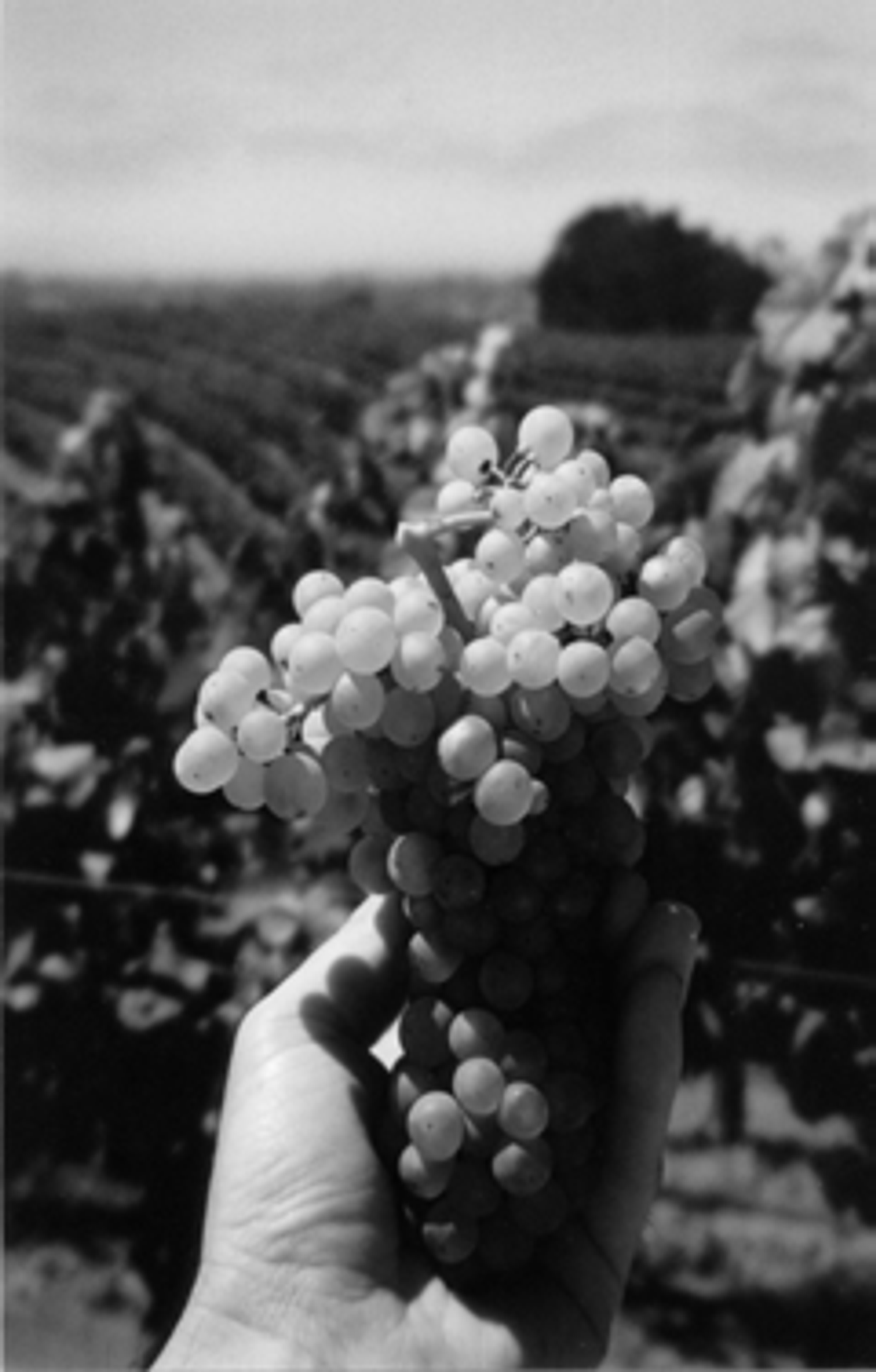
We have two additional clones of Chardonnay—Clone 15 and Clone 4. Clone 15 was originally identified in Washington and then later certified by UC Davis. What interests us in Clone 15 is the high quality of fruit and a fruiting habit of a fairly loose, open cluster. This attribute helps to avoid the problem of mold and rot by allowing air movement throughout the cluster. In a cooler region such as the Santa Cruz Mountains, this is an important attribute.
At Regan Estate Vineyards, the Mt. Eden clone represents a significant portion of our Chardonnay. Our 2004 Reserve vintage is comprised of 100% Mt. Eden clone. This represents the three bottles of this month’s Regan Vineyards Wine Club release.
2004 Reserve Santa Cruz Mountains Chardonnay
The 2004 Reserve Santa Cruz Mountains Chardonnay has deep rich aromas of tropical fruit. Banana, mango and melon are apparent. In the mouth, the wine displays good viscosity with the wonderful tropical fruit carrying through. The finish is full, yet supple and yields to a sweet, smoky-oak finish.
We hope you have enjoyed learning more about the unique tradition of the Mt. Eden clone in the Santa Cruz Mountains. For more information about the heritage of Chardonnay in the Santa Cruz Mountains, please see recommended reading below:
Like Modern Edens: Winegrowing in the Santa Clara Valley and the Santa Cruz Mountains, 1758–1981.
Charles Sullivan. 1982
Late Harvest: Wine History of the Santa Cruz Mountains.
Michael Holland. 1983